Rental Property Tax Deductions Checklist for Small Landlords (2026)
Most costs you pay to rent out, manage and maintain a rental property are tax deductible, as long as they are ordinary and necessary. That includes mortgage interest, property tax, insurance, repairs, utilities you pay, travel to the property and depreciation of the building. Use the checklist below before you file, with the Schedule E line next to each deduction.
Big yearly deductions
These are usually the largest numbers on a small landlord’s return. Check each one:
| Deduction | Where to find the number | Schedule E line |
|---|---|---|
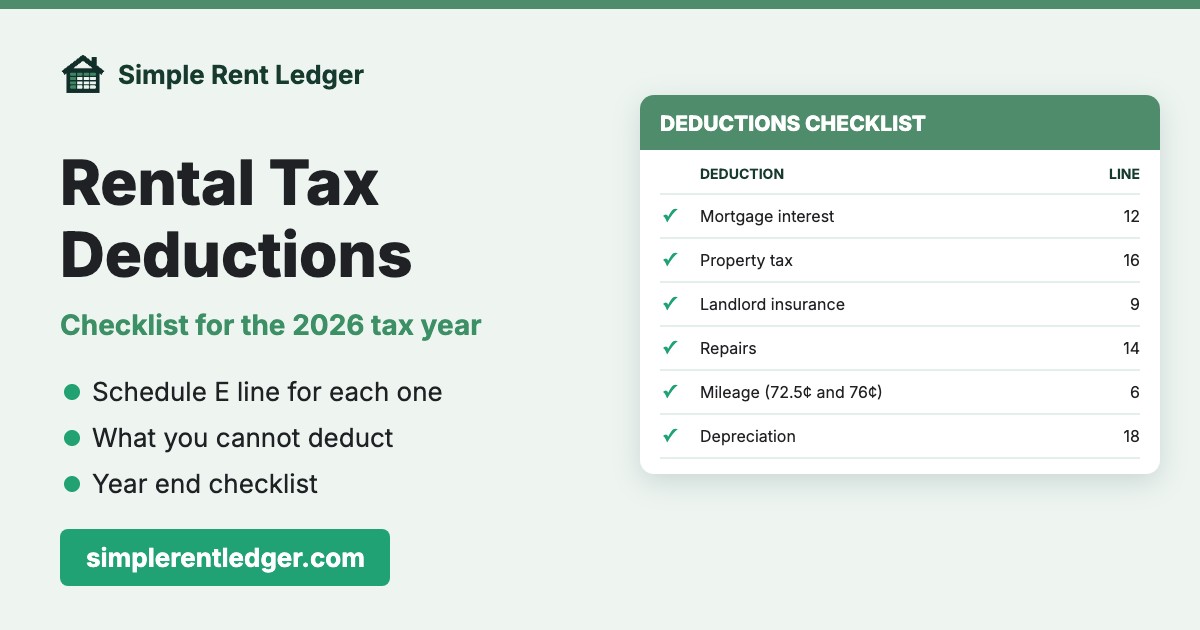
| Mortgage interest | Form 1098 from your lender | 12 |
| Property tax | Your county tax bill or escrow statement | 16 |
| Landlord insurance | Your policy or escrow statement | 9 |
| Depreciation of the building | Form 4562 (27.5 years for residential rentals) | 18 |
| HOA or condo dues | HOA statements | 19 |
Operating costs
| Deduction | Examples | Schedule E line |
|---|---|---|
| Advertising | Listing fees, signs, online ads | 5 |
| Cleaning and maintenance | Turnover cleaning, lawn care, pest control, snow removal | 7 |
| Leasing commissions | Agent fee to find a tenant | 8 |
| Legal and professional fees | Tax prep for the rental, attorney, accountant | 10 |
| Management fees | Property manager | 11 |
| Utilities you pay | Water, sewer, trash, gas, electric for the rental | 17 |
| Tenant screening you pay | Credit and background checks | 19 |
| Rental licenses and permits | City rental registration | 19 |
| Bank and payment fees | Rental account fees, ACH fees you pay | 19 |
| Software and forms | Rent apps, lease forms, postage for notices | 19 |
Repairs and supplies
| Deduction | Examples | Schedule E line |
|---|---|---|
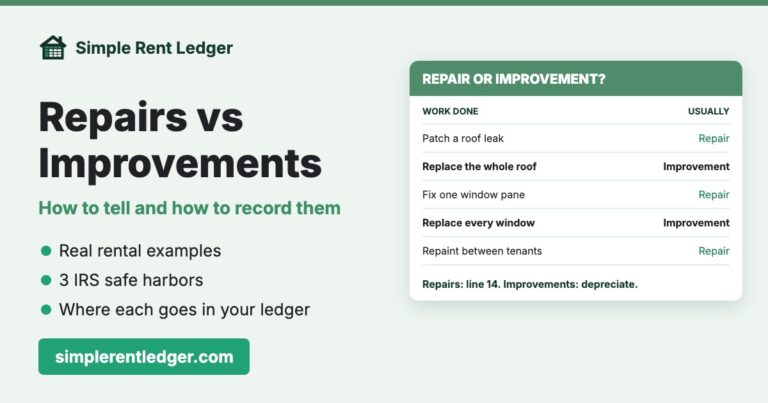
| Repairs | Fixing leaks, broken windows, a faulty outlet, patching drywall | 14 |
| Supplies | Light bulbs, filters, smoke alarm batteries, small tools | 15 |
| Small items under the de minimis safe harbor | Items costing $2,500 or less each, if you make the election | 14 or 15 |
A big project may be an improvement instead of a repair. Read repairs vs improvements before you deduct a new roof or a remodel.
Travel and mileage
- Drives to show the unit, inspect it, make repairs, buy supplies or collect rent.
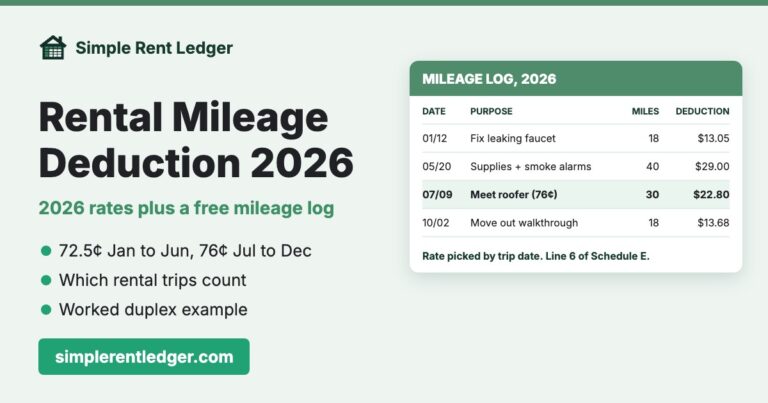
- 2026 standard mileage rate: 72.5 cents per mile from 01/01/2026 to 06/30/2026 and 76 cents per mile from 07/01/2026 to 12/31/2026.
- Parking and tolls for rental trips are added on top.
- Keep a log: date, destination, purpose and miles. Details in our rental mileage deduction guide.
Depreciation on more than the building
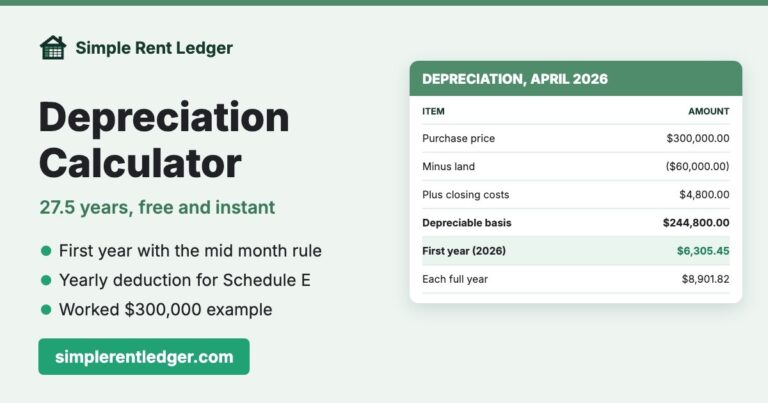
Besides the building itself, you can depreciate other property you buy for the rental. Estimate the building amount with our depreciation calculator. IRS Publication 527 lists these common recovery periods:
| Property | Recovery period |
|---|---|
| Residential rental building and structural improvements (roof, HVAC, windows) | 27.5 years |
| Appliances, carpets and furniture used in the rental | 5 years |
| Fences, driveways, landscaping and other land improvements | 15 years |
| Land | Never depreciated |
What you cannot deduct
- Mortgage principal
- The cost of improvements in the year you pay them (depreciate them instead)
- The value of your own labor
- Rent you lost during a vacancy
- Security deposits you will return
- Personal costs, or the personal share of a unit you live in
- Penalties and fines, such as a code violation fine
Year end checklist
- Download Form 1098 from your lender.
- Get your property tax bill or escrow statement.
- Total the year’s expenses by category in your spreadsheet.
- Add up your mileage log and apply the right 2026 rate for each half of the year.
- List any improvements with date and cost for depreciation.
- Make sure total rent, including late fees, matches your bank deposits.
- Hand the summary to your tax preparer or enter it in your tax software.
Want this checklist on paper? The free Starter Kit includes a printable year end tax checklist. Sign up below and we will send it to you.
Tax rules change and your situation may differ. Check IRS Publication 527 or ask a tax professional before you file.
Thinking about an LLC for your rental? See our LLC for rental property guide.
Work in real estate full time? See whether you qualify for real estate professional status.
Deductions bigger than your rent? Read how the rental loss rules work.
Your rental income comes first on Schedule E. Keep it in one place with our free rent ledger template, which totals the year for you.
Frequently asked questions
Are rental property repairs tax deductible?
Yes. Repairs that keep the property in normal working condition are deductible in the year you pay them on Schedule E line 14. Improvements are depreciated instead.
Can I deduct the cost of buying the rental?
Not all at once. The building part of the purchase price, plus some closing costs, is recovered through depreciation over 27.5 years. Land is not depreciated.
Is homeowners insurance deductible on a rental?
Insurance on a rental property is deductible on line 9. If you live in one unit of a duplex, deduct only the rental share.
Can I deduct expenses before my first tenant moves in?
Ordinary expenses are generally deductible from the time the property is available for rent. Costs before that may need to be added to the property’s basis instead. Ask a tax professional about your case.
Do I need receipts for every deduction?
You need records that show the amount, date and purpose. Receipts, invoices and bank or card statements all help. Keep them at least 3 years after you file. Keep purchase and improvement records longer: until 3 years after you file the return for the year you sell the property.