Section 8 Inspection Checklist (Free PDF, NSPIRE)
A Section 8 inspection is the housing authority’s check that a rental meets HUD’s health and safety standards before a voucher tenant moves in, and at least every two years after that. Housing authorities are switching from the old HQS standard to HUD’s NSPIRE standard, which they must use for voucher inspections by February 1, 2027. Below is a free printable Section 8 inspection checklist based on NSPIRE, so you can check the unit yourself before the inspector comes.
Free Section 8 inspection checklist (PDF). Two pages, 29 items in 10 groups: alarms, heat and water, electrical, kitchen, bathroom, doors and windows, walls and stairs, leaks and pests, outside and lead paint, plus a line to note what you fixed. You can tick the boxes on screen or print it.
This is a self check, not an official HUD form. Your housing authority may use its own checklist.
When Section 8 units are inspected
| Inspection | When |
|---|---|
| Initial | Before the first lease term starts, to confirm the unit meets the standard |
| Periodic | At least every two years while the family lives there (small rural housing authorities: every three years) |
| Special or complaint | When the family or a government official reports a possible problem: within 24 hours for a life-threatening issue, within 15 days for others |
| Quality control | A supervisor rechecks a sample of inspections |
Source: 24 CFR 982.405. Your housing authority sets the exact dates and tells you and the tenant ahead of time.
HQS vs NSPIRE: which standard applies?
For years, voucher units were inspected under Housing Quality Standards (HQS). HUD’s newer National Standards for the Physical Inspection of Real Estate (NSPIRE) replace them. Under HUD Notice PIH 2026-18 (issued July 15, 2026), housing authorities must use NSPIRE for voucher inspections by February 1, 2027 and may keep using HQS until then.
- Pass or fail: voucher inspections are pass or fail, not scored.
- Smoke alarms are required under both standards. Ask your housing authority about its carbon monoxide alarm rules too.
- Ask your housing authority which standard and which checklist it uses for your unit.
What the inspector checks
NSPIRE has 63 standards covering the unit, the inside of the building and the outside. For a house or small rental, these are the ones that matter most, and the checklist follows them:
| Area | What is checked |
|---|---|
| Smoke and CO alarms | A working smoke alarm on every level, inside each bedroom and within 21 feet of each bedroom door; carbon monoxide alarms where required |
| Heat | A permanently installed heat source that works; no unvented gas, oil or kerosene space heaters; furnace and boiler vents connected |
| Water | Hot and cold running water in the kitchen and bathroom; water heater safe and not leaking |
| Electrical | GFCI protection for outlets within 6 feet of a water source; no exposed wires; 2 working outlets (or 1 outlet and a permanent light) in each habitable room; a permanent light in the kitchen and each bathroom |
| Kitchen and bathroom | A working cooking appliance, refrigerator and sink; a working toilet, sink and tub or shower; ventilation |
| Doors, windows and exits | Entry doors that lock, windows that work, exits not blocked |
| Safety | Handrails and guardrails, no trip hazards, no leaks, no mold-like growth, no pests |
| Lead paint | In homes built before 1978, deteriorated paint can be a violation, and HUD lead rules still apply |
Common reasons units fail
- A missing, dead or wrongly placed smoke alarm, or no carbon monoxide alarm where one is required.
- Outlets near the kitchen or bathroom sink without GFCI protection.
- No working heat in cold weather. Under the NSPIRE heating standard, a missing or broken permanent heat source when it is below 68°F outside is life-threatening.
- An unvented fuel-burning space heater, which is a life-threatening failure.
- Exposed wires, missing outlet covers or an open breaker panel.
- A bedroom window or exit blocked by furniture.
- Chipped or peeling paint in a home built before 1978.
What happens if the unit fails
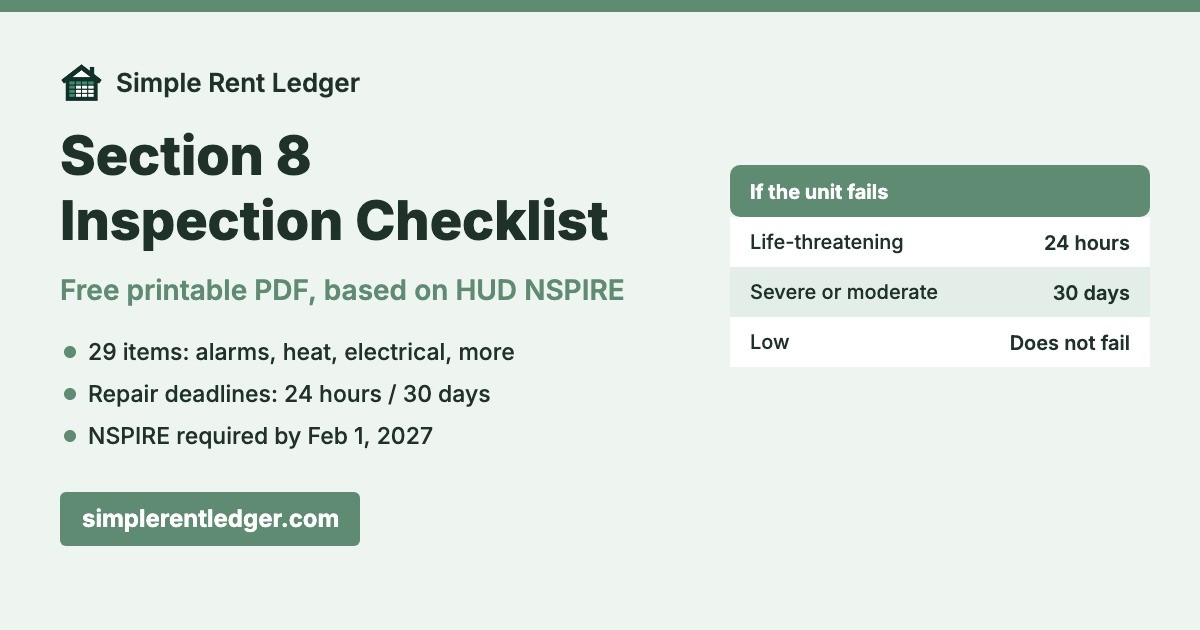
| Deficiency level | Deadline to fix after notice |
|---|---|
| Life-threatening | 24 hours |
| Severe or moderate | 30 days, or a longer time the housing authority approves |
| Low | Does not fail the inspection |
If repairs are not made on time, the housing authority can withhold or abate (stop) the housing assistance payments, and it must end the contract if the repairs are still not made within 60 days. The owner may not end the family’s tenancy because payments were withheld or abated, and may not pass reinspection fees on to the family (HUD Notice PIH 2026-18, 24 CFR 982.404 and 982.405). Keep the tenant’s share and the housing authority’s payment on separate lines of your rent ledger, so a withheld payment is easy to spot.
Who pays to fix what
The owner must keep the unit up to the standard and fix deficiencies on time. The family can be held responsible when the problem comes from (24 CFR 982.404):
- Not paying for utilities the tenant is supposed to pay.
- Not providing or maintaining appliances the tenant is supposed to supply.
- Damage beyond ordinary wear and tear caused by someone in the household or a guest.
In those cases the housing authority can waive the owner’s duty for that item, and the family must fix it within the same 24 hour or 30 day deadlines.
How to prepare for the inspection
- Walk the unit with the checklist a week or two before the date, so you have time to fix what you find.
- Test every smoke and carbon monoxide alarm and every GFCI outlet.
- Check the heat and hot water, especially before fall and winter inspections.
- Tell the tenant the date and time, and make sure owner-paid utilities are on and the inspector can get in.
- Keep proof of repairs (photos, receipts) in case the housing authority accepts them for a reinspection.
New to the program? Read how to become a Section 8 landlord, and track the tenant’s share and the housing authority’s payment separately with the Section 8 rent ledger.
This checklist is not an official HUD or housing authority form. Your housing authority may use HQS until February 1, 2027 and may have local requirements.
Related free tools
- How to become a Section 8 landlord
- Section 8 rent ledger: track tenant and housing authority payments
- Rental property inspection checklist: routine visits during the lease
- Move in inspection checklist
Frequently asked questions
What do Section 8 inspectors look for?
Health and safety items: working smoke alarms (and carbon monoxide alarms where required), a permanent heat source, hot and cold water, safe electrical work including GFCI outlets near water, a working kitchen and bathroom, doors and windows that work, no blocked exits, no leaks, pests or mold-like growth, and no deteriorated paint in homes built before 1978.
What is NSPIRE?
NSPIRE (National Standards for the Physical Inspection of Real Estate) is HUD’s inspection standard that replaces Housing Quality Standards (HQS) for HUD-assisted housing, including Section 8 voucher units.
When does NSPIRE replace HQS for Section 8?
Under HUD Notice PIH 2026-18, housing authorities must use NSPIRE for voucher inspections by February 1, 2027. They may use HQS until then and can switch earlier.
How often are Section 8 units inspected?
Before the lease starts, then at least every two years (every three years for small rural housing authorities), plus special inspections when a problem is reported.
What happens if my unit fails a Section 8 inspection?
You must fix life-threatening deficiencies within 24 hours of notice and others within 30 days or an approved extension. If you do not, the housing authority can withhold the assistance payments, and must end the contract if repairs are still not made within 60 days.
Who pays for repairs found in a Section 8 inspection?
Usually the owner. The family can be responsible for problems caused by unpaid tenant utilities, tenant-supplied appliances or damage beyond ordinary wear and tear.
Sources
- HUD Notice PIH 2026-18: NSPIRE administrative procedures for voucher programs (July 15, 2026)
- HUD: NSPIRE standards
- HUD: NSPIRE HVAC standard
- 24 CFR 982.404 (owner and family responsibility)
- 24 CFR 982.405 (inspections)
- Indiana Housing and Community Development Authority: NSPIRE affirmative habitability requirements