Rental Property Inspection Checklist for Landlords (Free Fillable PDF + Winter Prep)
A rental property inspection checklist is the list you walk through during a routine visit while the tenant lives in the unit: safety alarms, plumbing, heat, the inside of the unit and the outside of the building. It helps you catch small problems before they turn into big repairs, and it gives you a dated record. Below is a free checklist you can fill in on screen or print, with a winter prep section, plus how to give notice and run the visit.
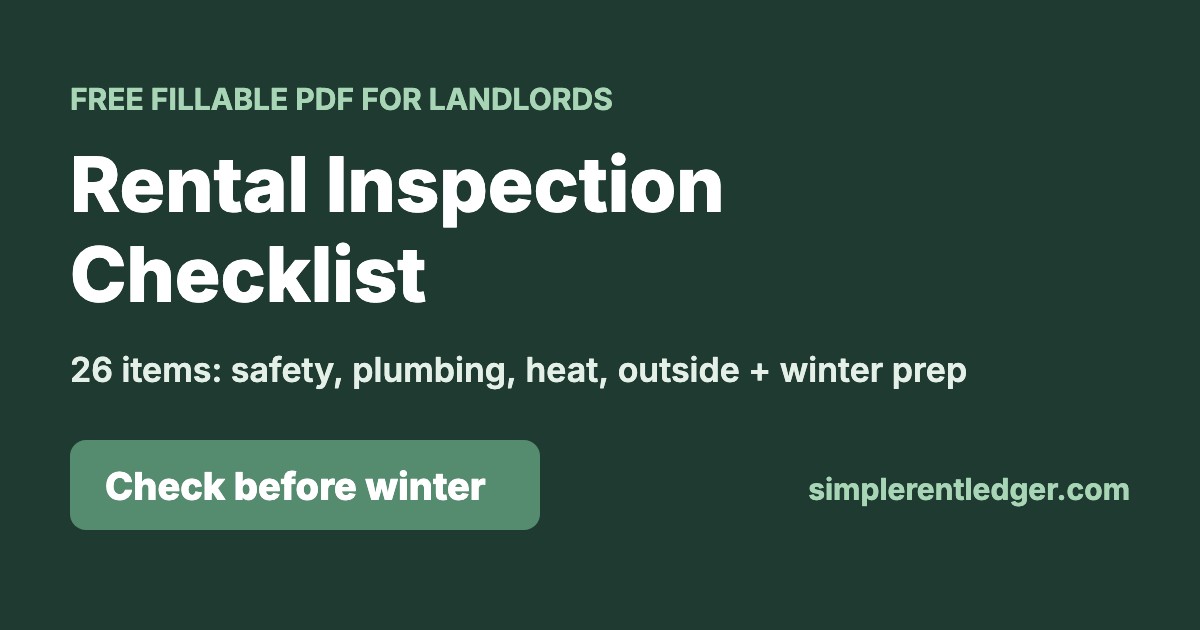
Free fillable rental inspection checklist (PDF). One page with 26 items in 6 groups: safety, water and plumbing, heating and cooling, inside the unit, outside, and winter prep. Each item has an OK box, a Fix box and a notes line, plus repairs to schedule, the next inspection date and signatures.
What should a rental inspection checklist include?
| Area | What to check |
|---|---|
| Safety | Test smoke and carbon monoxide alarms, check the fire extinguisher if you provide one, look for exposed wires, test GFCI outlets, shake stair railings. |
| Water and plumbing | Look under every sink and around toilets for leaks, check the water heater for rust or leaks, look for moisture stains or mold, run the drains. |
| Heating and cooling | Make sure heat reaches every room, check or change the HVAC filter, test the thermostat. |
| Inside the unit | Walls, ceilings and floors, windows and doors that open, close and lock, appliances you supply, signs of pests, and any changes not allowed by the lease. |
| Outside | Roof, gutters and downspouts, siding and paint, foundation cracks, walkways and lighting, trees and fences. |
| Winter prep | Outdoor faucets, exposed pipes, weatherstripping, chimney or fireplace, and who clears snow and ice. |
This is a routine inspection during the tenancy. For the day a tenant arrives or leaves, use a move in or move out checklist instead. Those record the condition for the security deposit.
Winter prep items for November
A fall inspection is the best time to prevent the expensive winter calls: a frozen pipe, a furnace that quits on the coldest night, or an ice dam leaking through the ceiling.
- Heat: have the furnace or boiler serviced, replace the filter, and make sure every room warms up. Heat is a basic habitability item in many places. In New York City, for example, landlords must keep apartments at least 68°F during the day when it is below 55°F outside, and at least 62°F at night, from October 1 to May 31.
- Pipes: shut off and drain outdoor faucets or add covers, insulate pipes in crawl spaces, garages and outside walls, and tell tenants where the main water shutoff is.
- Drafts: replace worn weatherstripping and caulk gaps around windows and doors. It keeps the unit warmer and heating bills lower.
- Roof and gutters: clean gutters and check that downspouts drain away from the foundation.
- Fireplace: if the unit has one, have the chimney checked before the tenant uses it.
- Snow and ice: put in writing who clears walkways and steps, the tenant or you, based on your lease and local rules.
How much notice do you need to give?
Even though you own the property, the tenant has the right to live there privately. Give notice before every routine visit and follow your lease and state law. Two examples:
| State | Entry rule | Law |
|---|---|---|
| California | Written notice with the date, approximate time and purpose. 24 hours is presumed reasonable. Entry during normal business hours. The law lists the reasons a landlord may enter, such as necessary or agreed repairs and services, so tie a routine inspection to checking for needed repairs and maintenance. | Civil Code 1954 |
| Florida | The tenant may not unreasonably refuse entry to inspect. For repairs, 24 hours notice between 7:30 a.m. and 8:00 p.m. counts as reasonable. | Fla. Stat. 83.53 |
Other states have their own rules, and some leave it to “reasonable notice”. Put your inspection policy in the lease, give notice in writing even when the law does not require it, and write the date and method on the checklist. Our guides for California, Texas, Florida and New York cover more state rules.
How to do a routine inspection, step by step
- Send written notice with the date, a time window and the reason, for example “routine maintenance and winter inspection”.
- Bring the checklist, a flashlight, spare alarm batteries, HVAC filters and your phone for photos.
- Ask the tenant first if anything is broken or not working. Tenants often know about small leaks before you do.
- Go room by room in the same order every time, tick OK or Fix, and take dated photos of anything that needs work.
- Be respectful. You are checking the building, not judging how the tenant lives. Keep the visit short and leave everything as you found it.
- Sign and date the checklist, list the repairs to schedule, and give the tenant a copy.
How often should you inspect a rental?
There is no single federal rule. Many small landlords do a routine inspection once or twice a year, often one in the fall before winter and one in the spring, plus the move in and move out inspections. Inspect more often if the building is older, if you saw problems last time, or if your lease or insurance asks for it. Don’t overdo it: frequent visits can feel like harassment and some states limit entry.
What to do after the inspection
- Fix safety items right away, such as dead alarms, leaks, exposed wires and loose railings.
- Schedule the rest and tell the tenant when workers will come, with notice.
- Record every repair and its cost in your rent ledger. Repairs are usually deductible in the year you pay them, while improvements are depreciated. See repairs vs improvements.
- If the tenant caused damage, write it down with photos and talk to them in writing. Keep the checklist with the lease. See our record keeping guide for how long to keep it.
Entry and notice rules differ by state and city, and your lease may add its own terms. Check your state law before you enter a rented unit.
Renting to a Housing Choice Voucher tenant? See our Section 8 inspection checklist.
First rental? Our how to be a landlord checklist covers every step before the first tenant moves in.
Frequently asked questions
Can a landlord do a routine inspection?
In most states, yes, with proper notice and for a reasonable purpose such as checking for needed repairs. The exact rules come from your state law and your lease. In California, for example, you must give written notice and the law lists the reasons a landlord may enter.
What does a landlord look for during an inspection?
Safety items like smoke and carbon monoxide alarms, leaks and moisture, heating and cooling, the condition of walls, floors, windows and appliances, signs of pests, and the outside of the building.
How often can a landlord inspect a rental?
Many small landlords inspect once or twice a year, plus move in and move out. Your state may limit how often or when you can enter, so keep visits reasonable and always give notice.
Does the tenant have to be home for an inspection?
Usually not, if you gave proper notice and your state allows entry for that purpose. Many landlords invite the tenant to be there anyway, because it builds trust and they can point out problems.
What should I check before winter?
The heat, outdoor faucets and exposed pipes, weatherstripping, gutters, the chimney if there is one, and a clear plan for snow and ice removal.