Normal Wear and Tear vs Damage: Examples and Free Checklist
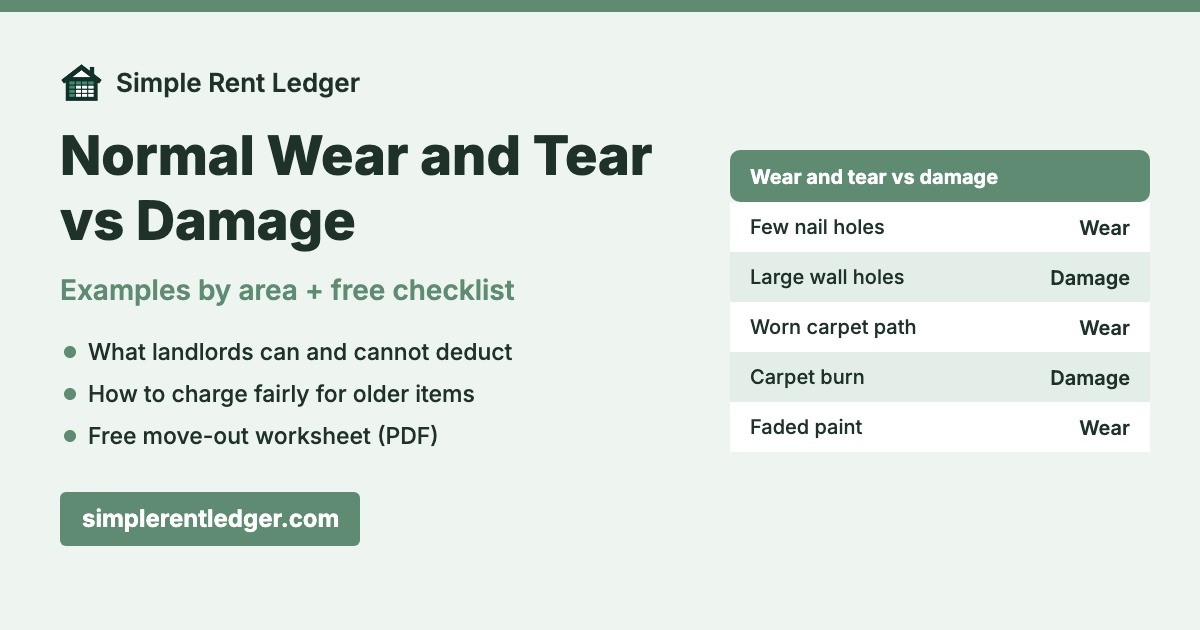
Normal wear and tear is the deterioration that happens to a rental just from people living in it: faded paint, lightly worn carpet, a few small nail holes. Damage is harm caused by an accident, misuse, neglect or abuse, such as burns, large holes or pet stains. The difference matters because, in general, a landlord can deduct the cost of damage from the security deposit but not the cost of normal wear and tear. Below is a side-by-side table for every part of a rental and a free move-out checklist to record your decisions.
Free wear and tear vs damage checklist (fillable PDF). One page: 15 areas of the unit, move-in and move-out condition, a wear or damage box for each, the cost charged, and totals for deductions, deposit held and refund. Type into it on screen or print it.
What is normal wear and tear?
Normal (or “ordinary”) wear and tear is the gradual aging of a home from its intended use. It happens even with a careful tenant, and it is part of the landlord’s cost of owning a rental. Several states write the idea into their security deposit laws:
- Texas defines normal wear and tear as deterioration that results from the intended use of a dwelling, and says it does not include deterioration from negligence, carelessness, accident or abuse by the tenant, a household member or a guest. A Texas landlord may not keep any part of the deposit to cover normal wear and tear (Property Code 92.001 and 92.104).
- California lets a landlord use the deposit to repair damage caused by the tenant or a guest, “exclusive of ordinary wear and tear” (Civil Code 1950.5).
Other states use similar wording. Check your own state’s deposit law, and see our California and Texas landlord guides.
Normal wear and tear vs damage: examples by area
| Area | Usually normal wear and tear | Usually damage |
|---|---|---|
| Walls and paint | Faded or lightly scuffed paint; a few small nail holes from pictures | Large holes, crayon or marker, unapproved paint colors, smoke stains |
| Carpet | Worn paths in walkways, light fading, flattened pile | Burns, large stains, pet urine, rips, holes |
| Hard floors | Light surface scratches, dull finish in busy areas | Deep gouges, water damage from a leak left unreported, pet scratches through the finish |
| Doors and locks | Loose handles, worn finish from use | Holes, broken doors or frames, locks changed without permission |
| Windows and blinds | Sun-faded blinds, worn cords | Broken glass, bent or missing blinds, torn screens |
| Kitchen | Worn countertop finish, aging appliances that stop working from age | Burns or cuts in counters, broken appliance parts from misuse, grease left to build up |
| Bathroom | Worn grout, slightly dull fixtures | Cracked tiles or sink, mold from never running the fan, broken towel bars |
| Lights and electrical | Burned-out bulbs from normal use | Broken fixtures or switch plates, removed smoke alarms |
| Outside and yard | Weathered paint, normal plant growth | Ruts from parking on the lawn, trash or furniture left behind |
| Odors | Mild everyday smells that fade with airing out | Strong smoke or pet odors that need treatment |
These are common examples, not legal rules. The same mark can be wear and tear in one case and damage in another, depending on its cause and how long the tenant lived there.
How to tell the difference
- What caused it? Ordinary use points to wear and tear. An accident, misuse, neglect or abuse points to damage.
- How long did the tenant live there? A worn carpet after six years is expected. The same wear after six months is not.
- How old was the item at move-in? Compare against your move-in report and photos.
- Is it more than ordinary living would cause? A few picture nails is ordinary. Dozens of anchors and large holes is not.
Charging for damage to older items
When an item is damaged but was already old, a common and fair approach is to charge only for the part of its useful life that was left, not the cost of a brand new one. Charging full replacement cost for an item that was already near the end of its life is a common source of deposit disputes.
| Example (numbers are only an example) | Amount |
|---|---|
| Carpet cost when installed | $1,200 |
| Expected life you planned for | 8 years |
| Age when the tenant moved out | 6 years |
| Life left (8 – 6) | 2 years |
| Fair charge for damage that requires replacement ($1,200 x 2/8) | $300 |
What about cleaning?
Rules differ by state. California, for example, allows the deposit to cover cleaning needed to return the unit to the same level of cleanliness it was in when the tenancy began. Routine cleaning between tenants is generally your cost; cleaning up a mess beyond normal living is easier to justify as a deduction, especially with photos. Write each deduction on the tenant’s tenant ledger so it matches your itemized list.
Documenting wear and tear and damage
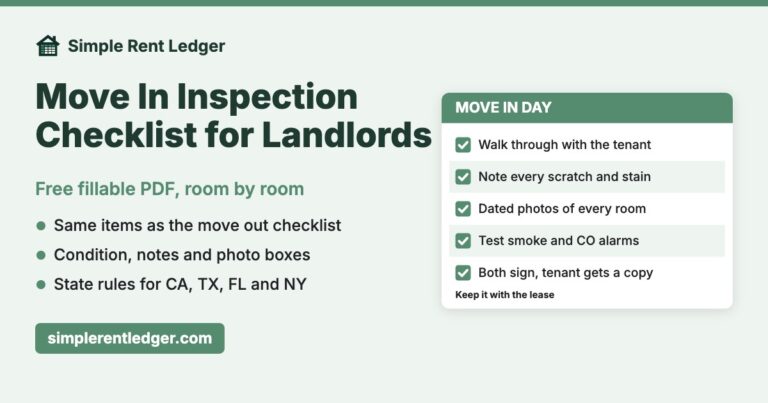
- Move-in report and photos: without a record of the starting condition, it is hard to prove damage later. Use the move-in inspection checklist.
- Move-out photos: date-stamped photos of every room before you repair or clean anything.
- Receipts and estimates for each repair or cleaning cost.
- State rules: some states set extra requirements. California, for example, requires landlords to photograph the unit after move-out and before repairs or cleaning they will deduct for (since April 1, 2025), and at move-in for tenancies starting on or after July 1, 2025. It also requires the itemized statement within 21 days after the tenant moves out. Texas generally gives 30 days to refund the deposit and itemize deductions.
The move-out checklist for landlords walks through the inspection room by room.
How to itemize deductions
List each deduction separately with what was wrong, why it is damage and not wear and tear, and the cost. For example:
| Item | Reason | Cost |
|---|---|---|
| Bedroom carpet | Burn mark, 6 years into an 8-year life; prorated replacement | $300.00 |
| Living room wall | Three large holes from wall anchors; patch and paint one wall | $140.00 |
| Kitchen blinds | Two slats broken; replace blind | $35.00 |
| Walls and paint elsewhere | Light scuffs and small nail holes: normal wear and tear | $0.00 |
| Total deductions | $475.00 |
Example numbers only. Send the list with the refund using the security deposit return letter, and record it in the security deposit tracker.
Security deposit rules, deadlines and penalties differ by state and city, and some states have their own definitions. Check your state law or a local attorney before withholding a deposit.
Frequently asked questions
What is considered normal wear and tear in a rental?
The gradual aging of the home from ordinary living: faded or lightly scuffed paint, a few small nail holes, carpet worn in walkways, loose door handles and worn grout. It happens even with a careful tenant.
Can a landlord charge for normal wear and tear?
Generally no. Many state deposit laws let landlords deduct for damage beyond normal wear and tear, not for normal wear and tear itself. Texas and California, for example, say so in their statutes.
Are nail holes normal wear and tear?
A few small nail holes from hanging pictures are usually treated as normal wear and tear. Many large holes, anchors or holes that need major patching are more likely to be damage.
Is carpet replacement normal wear and tear?
Carpet that is simply worn out from age and use is normal wear and tear. Burns, large stains, pet urine and rips are damage, and many landlords charge only for the remaining useful life of the carpet.
Can a landlord charge for painting after a tenant moves out?
Routine repainting because of age is usually the landlord’s cost. Painting needed because of damage, such as marker, smoke stains or unapproved colors, is more likely to be a valid deduction.
How do I prove damage beyond normal wear and tear?
Compare a signed move-in report and photos with date-stamped move-out photos, and keep receipts or estimates for each repair.